
An overbite is one of the most common orthodontic concerns among children and teenagers. Some overbite cases come mainly from tooth position. Others involve the relationship between the upper and lower jaws.
For a growing child whose lower jaw sits further back than the upper jaw, treatment may need to do more than straighten teeth. This is where Invisalign’s mandibular advancement system offers another option.
In short: the Invisalign System with mandibular advancement uses clear aligners with built-in occlusal blocks to guide the lower jaw forward while also straightening the teeth. Align Technology designed it for growing children and teenagers with a Class II bite, where the lower jaw sits behind the upper jaw. Whether it suits your child depends on their growth stage and bite, which only an assessment can determine.
What Is Invisalign Mandibular Advancement With Occlusal Blocks?
Standard Invisalign treatment focuses on moving teeth into better alignment. Mandibular advancement goes further by also addressing how the jaws sit in relation to each other.
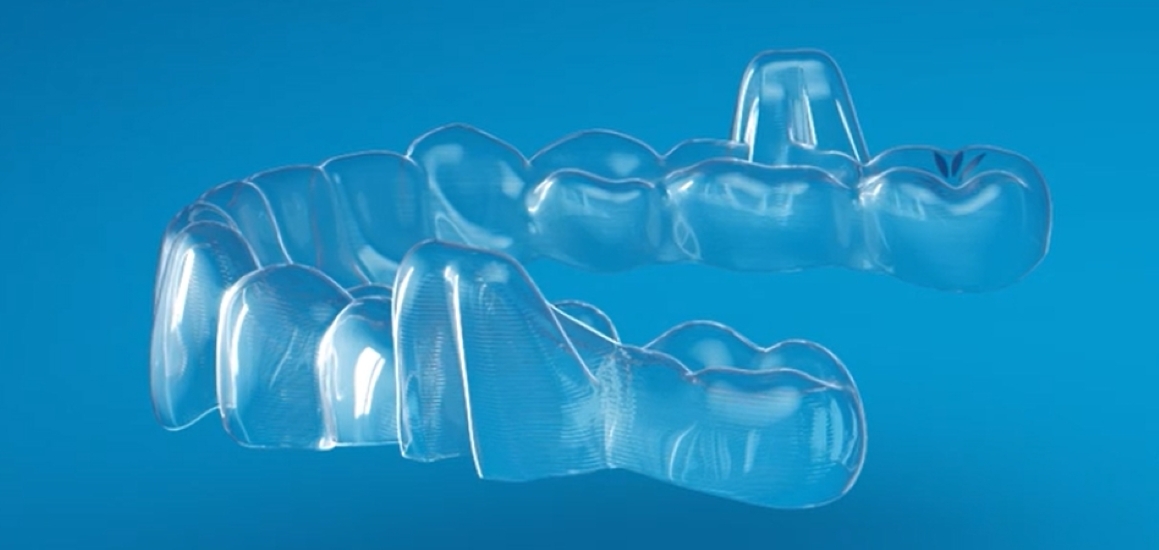
The treatment uses customised Invisalign aligners with integrated occlusal blocks. These small structures guide the lower jaw forward when your child bites down.
The system is designed for Class II malocclusion, most often where the lower jaw sits behind the upper jaw. This jaw relationship can contribute to:
- Increased overjet, where the upper front teeth appear more prominent
- A deep overbite
- A lower jaw that appears set back
- An uneven bite
The difference from conventional treatment is designed to address tooth alignment and jaw position together during the growth phase, rather than separately.
Why an Overbite is Sometimes More Than a Teeth Problem
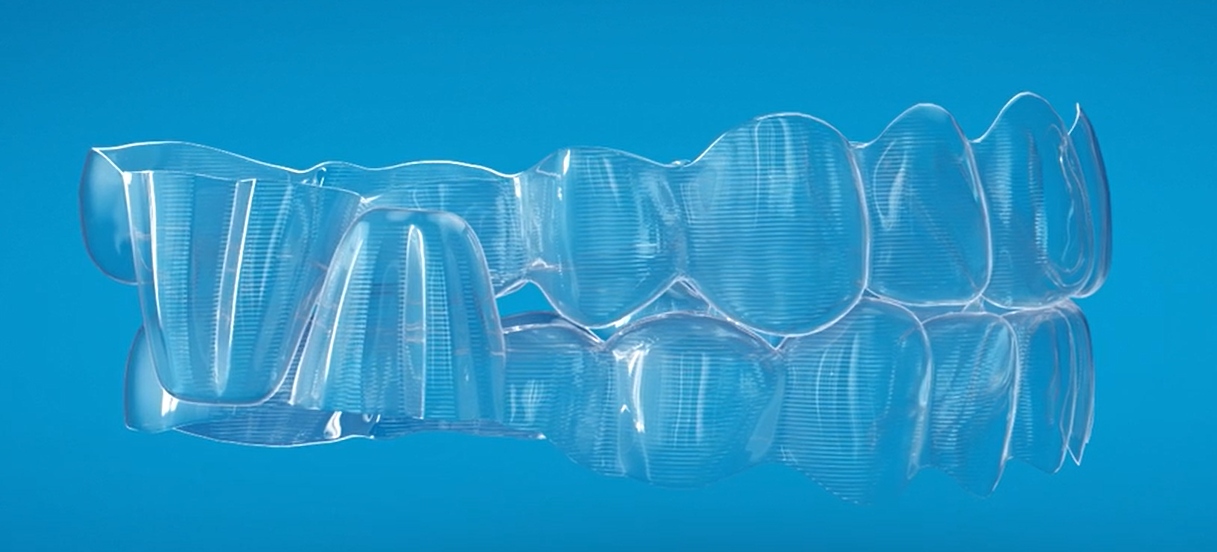
Alt text: 3D model of clear aligners with occlusal blocks showing the bite and jaw relationship
Most people picture an overbite as front teeth that overlap too far. In practice, an assessment considers both tooth position and jaw development, because they often require different treatment. Overbite is vertical overlap, and overjet is horizontal. Class II usually presents as increased overjet (“buck teeth”), while parents search “overbite” for both.
Dental overbite
A dental overbite happens when the teeth themselves sit in a way that creates excessive vertical overlap. Contributing factors can include tooth inclination, crowding, and habits during development.
These cases can often be managed by moving the teeth alone.
Skeletal Class II overbite
A skeletal overbite involves the position of the jaws themselves. In Class II cases the lower jaw often sits further back, the upper and lower jaws do not meet ideally, and the bite can affect both function and facial balance.
For children and teenagers who are still growing, treatment can work with natural growth rather than against it. This is the group Invisalign mandibular advancement was designed for.
Why Timing Matters With Overbites
This is the point worth understanding before anything else.
Changing jaw position works best while your child is still growing. Research on Invisalign’s mandibular advancement feature suggests treatment during the pubertal growth spurt produces more skeletal change, while treatment before puberty tends to move teeth rather than the jaw. That is why this system is designed for growing patients, generally around ages 10 to 16, rather than every child with an overbite.
This does not mean every child needs early treatment. The American Association of Orthodontists recommends a first orthodontic check-up by age seven, when a child has a mix of baby and adult teeth. An assessment at that age lets your dentist monitor the bite and advise when, or whether, to treat. Dental Home’s children’s dental care covers what a first assessment involves.
Once growth is complete, an appliance can no longer guide the jaw in the same way. Depending on the case, options include orthodontic treatment that improves the bite by moving the teeth, or jaw surgery for more significant skeletal differences.
Can Invisalign Correct an Overbite Without Surgery?
For selected growing patients, yes. Invisalign mandibular advancement is a non-surgical option for certain Class II bites, using clear aligners with occlusal blocks to guide the lower jaw forward while the teeth are straightened. Results vary, and an assessment is the only way to know whether it suits your child.
Whether it suits your child depends on:
- Their age and growth stage
- How significant the jaw discrepancy is
- Tooth position and crowding
- Their overall dental health
Not every overbite needs jaw advancement, and not every child responds the same way. An assessment is the only way to know.
For adults whose jaw growth is complete, or for more severe skeletal discrepancies, different treatment options apply. We’ve covered what an adult overbite means for braces separately.
How Invisalign Mandibular Advancement Works
1. Digital assessment and treatment planning
Treatment starts with a full assessment. Your dentist reviews tooth alignment, bite fit, jaw position, growth pattern, and what you want to achieve.
We use an iTero digital scanner to take a 3D scan of your child’s teeth in 5-10 minutes, with no impression trays. That scan drives the treatment plan and lets you see the projected result before treatment begins.
2. Wearing the aligners
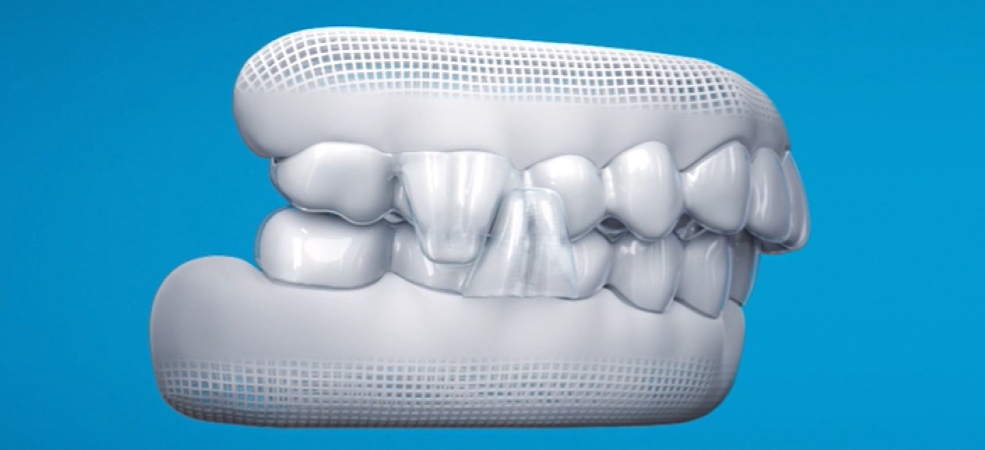
Your child wears customised Invisalign aligners fitted with integrated occlusal blocks. When they bite naturally, the blocks guide the lower jaw forward according to the plan.
The blocks provide steady engagement and bite opening as the jaw advances.
3. Straightening the teeth at the same time
This is the main practical advantage. Jaw advancement and tooth alignment happen within the same system, rather than as two separate treatment phases.
The aligners keep moving the teeth while supporting the change in bite. The system is designed to address alignment, overbite and the Class II relationship together, although results vary between patients.
4. Wearing time, check-ups and retainers
Your child wears the aligners for 20 to 22 hours a day and takes them out only to eat and to brush. Each set is usually changed every one to two weeks, following the schedule your dentist sets.
Wear time matters. The occlusal blocks can only guide the jaw while the aligners are in, so consistent wear has a direct effect on results.
Progress reviews are usually every six to eight weeks. Your dentist checks that the jaw is advancing as planned and the teeth are tracking, and adjusts the plan if they are not.
When treatment finishes, your child will need to wear retainers to hold the result while the surrounding bone and tissues settle.
Who Is It Suitable For?
The system is designed for growing patients, mainly children and teenagers aged around 10 to 16 with active jaw development.
Suitable candidates may include:
- Children or teenagers who are still growing
- Patients with a Class II bite
- Patients whose lower jaw sits behind the upper jaw
- Patients with a deep bite or pronounced overbite
Who it may be less suitable for:
- Patients whose growth is complete
- More severe skeletal discrepancies
- Children who struggle with consistent wear
- Some crossbite cases
Invisalign mandibular advancement is usually considered during late mixed dentition or early permanent dentition, meaning most adult teeth are through. Suitability depends on dental development rather than age alone, which is why two children of the same age can need different approaches.
Invisalign Mandibular Advancement vs Twin Block and Other Overbite Appliances
Before Invisalign mandibular advancement, Class II bites in growing patients were usually treated with headgear, removable appliances such as the Twin Block, or fixed appliances such as the Herbst. Invisalign mandibular advancement works on a similar principle to the Twin Block, guiding the lower jaw forward, but does it through clear aligners that also straighten the teeth.
| Feature | Traditional appliances | Invisalign mandibular advancement |
|---|---|---|
| Appearance | Varies. Headgear and fixed appliances are noticeable, and some removable appliances are bulky | Clear aligners, less noticeable than most traditional appliances |
| Tooth movement | Often a separate phase of treatment, commonly with fixed braces | Designed to happen within the same treatment |
| Removable | Headgear and removable appliances: yes. Fixed appliances: no | Yes, removable |
| Depends on consistent wear | Headgear and removable appliances: yes. Fixed appliances: no | Yes. Aligners need to be worn (usually around 20 to 22 hours a day) |
| Treatment planning | Physical impressions and adjustments | Digital scan and projected plan |
| Cleaning | Fixed and bulky appliances can be harder to clean around | Taken out to brush and floss |
Many parents reading this may have worn headgear or a fixed functional appliance themselves. Headgear and removable appliances depend heavily on being worn, while fixed appliances don’t but can be bulkier and harder to clean around. Invisalign aligners are also removable, so results depend on your child wearing them for the recommended hours each day.
The right choice still depends on your child’s bite, growth pattern and treatment goals, and results vary between patients. Some cases are better treated with fixed braces or another appliance, and your dentist will recommend that if it applies.
Where This Fits Among Invisalign Options for Children
Invisalign offers different systems for different stages:
- Invisalign First is for younger children generally aged around 6 to 10 who need early intervention
- Invisalign Teen is for teenagers whose adult teeth are mostly through
- Mandibular advancement is for growing patients who need Class II correction involving jaw position
Each serves a different clinical purpose. If you’re weighing up which stage your child is at, it’s worth reading how Invisalign First, Teen and Adult compare.
Benefits for Growing Patients
- Discreet appearance: Clear aligners are less noticeable than traditional functional appliances, which matters to a self-conscious teenager.
- Removable: Your child can take them out to eat and brush, so daily oral hygiene stays normal. That is a genuine advantage over fixed appliances at an age when brushing habits are still forming.
- Digital planning: Treatment is mapped out in advance, and you can see the projected outcome before starting.
- One coordinated treatment: Bite correction and tooth alignment happen together, not in sequence.
Things to Consider
Aligners suit many children, but it helps to know what treatment involves before you start.
- An adjustment period. Your child needs time to learn to bite with the lower jaw in its new forward position. Clinical research on mandibular advancement with aligners notes this learning period, along with some early discomfort.
- Consistent wear. The aligners only work while they are in. Because your child can take them out, results depend on wearing them 20 to 22 hours a day.
- Not every case suits aligners. Some bite problems are still better treated with fixed braces or another appliance. Your dentist will tell you if that applies to your child.
Is It Available at Dental Home?
Yes. Invisalign mandibular advancement is offered at Dental Home, across all five clinics in Puchong, Bukit Jalil and Mont Kiara.
As a certified Invisalign Black Diamond Provider, one of the highest provider tiers awarded by Align Technology, our doctors work with the full range of Invisalign systems, including those designed for growing patients.
That said, mandibular advancement is not suitable for every child. A consultation is needed to assess your child’s bite, jaw development, growth stage, and what you hope to achieve. If a different approach would serve your child better, we will say so.
Book an Overbite Assessment
If your child has an overbite, a deep bite, or a lower jaw that looks set back, an assessment will tell you where things stand. Sometimes the answer is simply to monitor and review in a year, which is useful to know either way.
Book an assessment at any of our five clinics in Puchong, Bukit Jalil or Mont Kiara. We will scan your child’s teeth, explain what we see, and give you a straight answer on whether treatment makes sense now or later.
Frequently Asked Questions
What age is suitable for Invisalign mandibular advancement?
It is designed for growing patients, generally around 10 to 16 years old, when most adult teeth have come through but the jaw is still growing. Suitability depends on growth stage and dental development rather than age alone, which an assessment will determine.
Can adults have Invisalign mandibular advancement?
It is not usually suitable for adults. The system relies on the jaw still growing, which is why it is designed for children and teenagers. Adults with an overbite still have options, including Invisalign treatment that corrects the bite by moving the teeth, or combined orthodontic and surgical treatment for more significant jaw differences. Your dentist will explain what suits your case.
Can Invisalign fix an overbite without braces?
For selected patients, yes. Mandibular advancement offers an option for growing patients with specific Class II bite concerns, but results vary. Some cases are still better treated with fixed braces, and your dentist will tell you honestly if that applies.
What are Invisalign occlusal blocks?
Occlusal blocks are structures built into the aligners that engage when your child bites down, guiding the lower jaw into a more forward position during treatment.
Are occlusal blocks uncomfortable?
There is usually an initial adjustment period while your child gets used to biting with the lower jaw in its new forward position. One clinical study of this treatment lists this learning period, along with some early discomfort, among the recognised challenges. Comfort varies between individuals, and your dentist will check how your child is adapting at the early reviews.
How many hours a day must the aligners be worn?
Between 20 and 22 hours a day. Your child takes them out only to eat and to brush. The occlusal blocks can only guide the jaw while the aligners are in, so consistent wear has a direct effect on results.
How long does treatment take?
It depends on the case. In one study of growing patients treated with an earlier version of the system, the jaw advancement phase averaged about nine months. Overall treatment is usually longer, because it can include a phase to prepare the teeth before the jaw is advanced and a phase to finish the alignment afterwards. After the digital scan, your dentist will give you a timeline for your child.
Does every overbite need jaw correction?
No. Some overbites come mainly from tooth position and are treated by moving the teeth. Others involve jaw relationship. An assessment determines which type your child has.
Is it too late if my child has stopped growing?
Jaw advancement relies on active growth, so once growth is complete, the jaw cannot be guided forward in the same way. That does not mean nothing can be done. Many overbites can still improve with orthodontic treatment that moves the teeth, and more significant jaw differences may require surgery. Growth timing varies between children, which is why an early assessment matters.
How much does it cost?
Cost depends on which Invisalign system your child needs and their expected treatment time. At Dental Home, Invisalign First with Mandibular Advancement is priced at RM13,500, and Invisalign First on its own is priced separately at RM11,000. Both include unlimited refinement rounds within an 18-month treatment window. We will confirm the exact cost in writing after your child’s assessment and scan.
About the Author
Dr Shaun Tan Pei Shian, BDS (IMU), MDC 7669
Dr Shaun is the founder and lead Invisalign provider at Dental Home, with 12 years of experience in clear aligner treatment. He provides personalised Invisalign treatment planning for patients with orthodontic concerns, including bite alignment and overbite correction.