
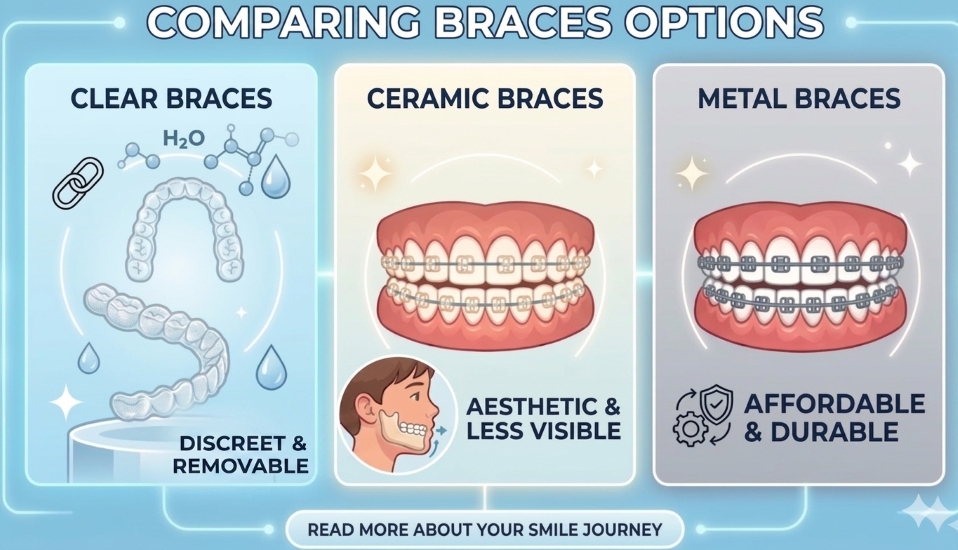
Many patients want straighter teeth, but they also worry about how braces will look during treatment. This concern is common among working adults, university students, teenagers, and anyone who feels self-conscious about smiling with visible brackets.
In Malaysia, patients often compare metal braces, ceramic braces, clear braces, transparent braces, and invisible teeth braces before deciding which option feels right. However, these terms can sometimes be confusing because patients may use them differently.
For example, “clear braces” may refer to ceramic braces with clear or tooth-coloured brackets. Some patients may also use the term to describe clear aligners or invisible teeth braces.
The best braces option is not only about appearance. It also depends on your dental condition, bite complexity, budget, lifestyle, oral hygiene, and the dentist’s recommendation.
This article explains the differences between clear braces, ceramic braces, and metal braces so you can better understand which option may suit your smile, budget, and daily routine before booking a consultation.
What Do Patients Mean by Clear Braces, Transparent Braces, and Invisible Teeth Braces?
Before comparing the options, it is important to understand the wording because patients may use these terms in different ways.
Clear braces may refer to ceramic braces with clear or tooth-coloured brackets. These are fixed braces that work similarly to metal braces but look less obvious.
Transparent braces may also refer to ceramic braces or clear aligner-style treatment, depending on how the term is used.
Invisible teeth braces often refer to clear aligners. These are removable transparent trays that fit over the teeth. However, no braces option is truly invisible in every situation.
For example, ceramic braces can blend better with your tooth colour, but the brackets are still attached to your teeth. Clear aligners may look very discreet, but they can still be seen up close depending on lighting, fit, and whether attachments are placed on the teeth.
In this article, we will compare:
- Metal braces
- Ceramic braces
- Clear, transparent, or invisible teeth braces, especially clear aligner-style options where relevant
What Are Metal Braces?
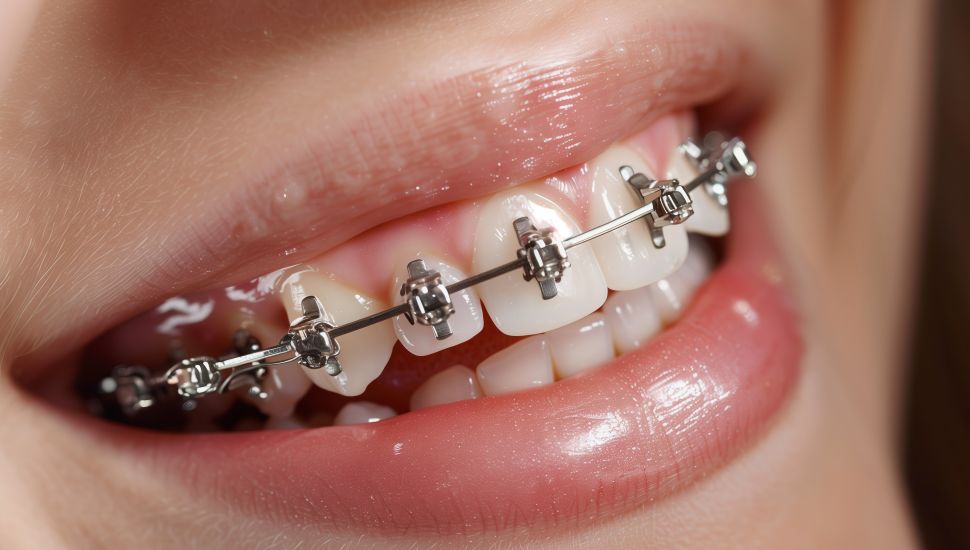
Metal braces are the traditional type of fixed braces. They use stainless steel brackets and wires that are attached to the teeth. Over time, the wires are adjusted to gradually move the teeth into better positions.
Metal braces are commonly used for a wide range of orthodontic cases, including crowded teeth, spacing, rotated teeth, and bite concerns. Because they are fixed onto the teeth, patients do not need to remember to put them back in after eating, unlike removable aligners.
Metal braces are usually more visible than ceramic or clear options. However, they remain popular because they are durable, reliable, and often more affordable compared to less visible braces options.
Metal braces may be suitable for patients who:
- Want a practical and commonly used braces option
- Are less concerned about appearance
- Have a tighter budget
- Prefer a fixed treatment option
- Need treatment for more complex tooth movement
The main trade-off is appearance. Metal brackets and wires are more noticeable when you talk or smile.
What Are Ceramic Braces?
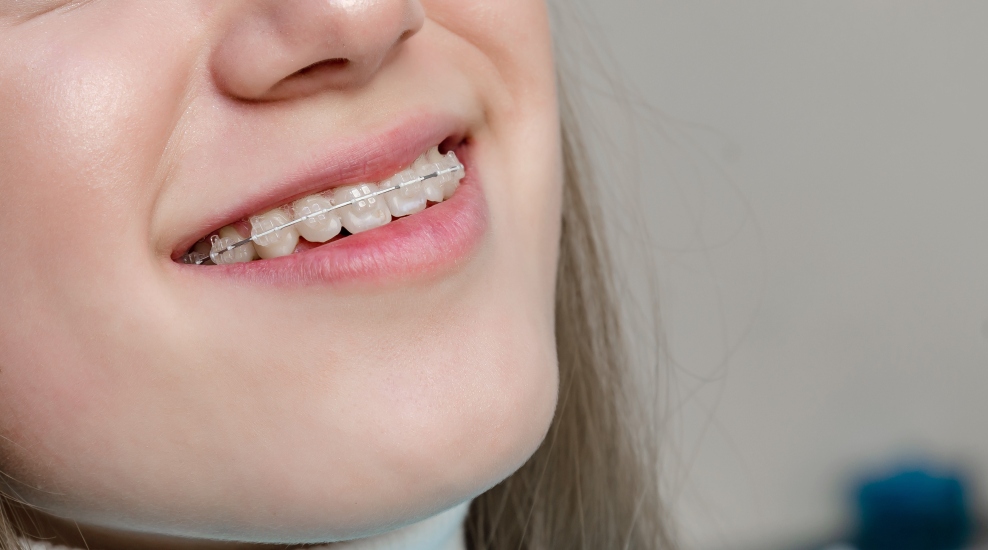
Ceramic braces work in a similar way to metal braces. They are also fixed onto the teeth and use brackets and wires to move the teeth gradually.
The main difference is the appearance. Ceramic braces use tooth-coloured or clear brackets that blend better with the natural colour of the teeth. This makes them less noticeable than traditional metal braces.
Ceramic braces may appeal to adults, teenagers, and working professionals who want fixed braces but prefer a more discreet appearance.
They may be suitable for patients who:
- Want fixed braces but less visible brackets
- Prefer a more natural-looking option
- Are willing to spend more than metal braces
- Can maintain good oral hygiene
- Want an option that still works like traditional braces
Modern ceramic brackets are designed to resist staining. However, the elastic ties that hold the wire may discolour from staining foods and drinks such as coffee, tea, curry, or coloured sauces. These elastic ties are usually replaced at each adjustment visit.
Ceramic braces may also need more careful cleaning because staining on the elastic ties can make them look more noticeable.
What Are Clear or Invisible Teeth Braces?
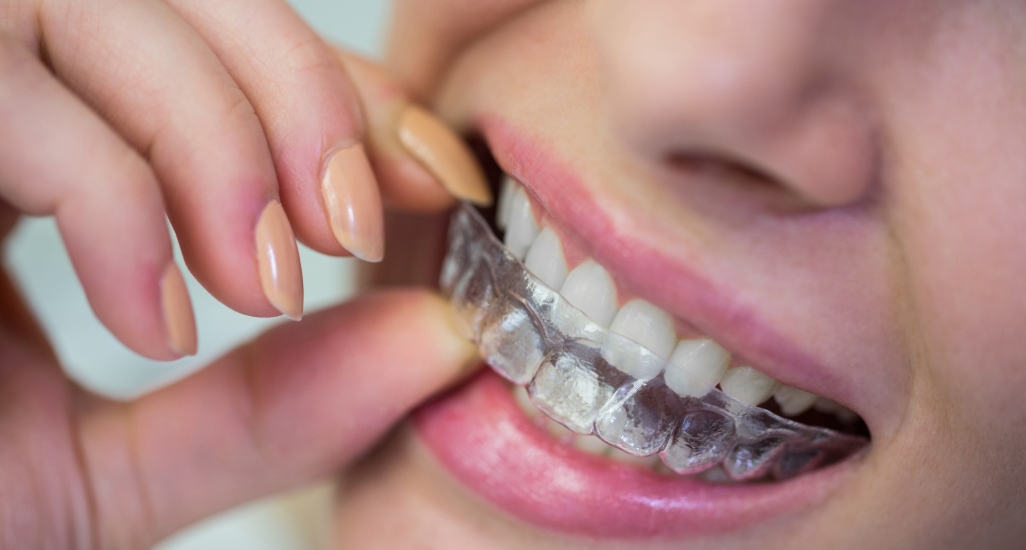
The term “clear or invisible teeth braces” usually refers to clear aligners in many patient searches.
Unlike metal or ceramic braces, clear aligners are not fixed to the teeth. They are removable transparent trays that fit over your teeth and are changed according to the treatment plan.
Clear aligners are generally less visible than fixed braces. They can also be removed for eating, brushing, and flossing.
However, clear aligners are not suitable for every orthodontic case. They require discipline because patients need to wear them as instructed. If the aligners are not worn for the recommended number of hours each day, treatment may not progress as planned.
Clear aligners may be suitable for patients who:
- Want a more discreet option
- Prefer removable treatment
- Can follow wearing instructions carefully
- Have a suitable orthodontic case
- Want easier brushing and flossing compared to fixed braces
The dentist will need to assess your teeth and bite before confirming whether clear aligners are suitable.
Clear Braces vs Ceramic Braces vs Metal Braces: Key Differences
The easiest way to compare braces options is to look at appearance, material, removability, durability, maintenance, suitability, and cost.
Factor | Metal Braces | Ceramic Braces | Clear / Invisible Teeth Braces |
Appearance | Most visible | Less visible | Least visible in many cases |
Material | Metal brackets and wires | Tooth-coloured or clear brackets | Clear removable trays or transparent-style appliances |
Removable? | No | No | Usually yes, if using clear aligners |
Durability | Very durable | More brittle and prone to breakage than metal brackets | Depends on patient compliance |
Cleaning | Needs careful brushing and flossing around brackets | Needs extra care to avoid staining around elastic ties | Must clean trays and teeth properly |
Best For | Many case types and budget-conscious patients | Patients who want fixed braces but less visible brackets | Patients who want a removable and discreet option |
Cost | Usually lower | Usually higher than metal braces | Varies depending on system and case complexity |
This table gives a general comparison, but it cannot replace a dental consultation. Some patients may prefer a specific option, but their bite condition or tooth movement needs may make another option more suitable.
Which Braces Look the Most Natural?
If appearance is your main concern, ceramic braces and clear aligners usually look more discreet than metal braces.
Ceramic braces are less noticeable because the brackets blend with the natural colour of the teeth. They are still fixed braces, but they look softer and more natural compared to metal brackets.
Clear aligners are often the least visible option because they use transparent trays instead of brackets and wires. However, they are not fixed braces, and they may still be visible up close, especially if attachments are placed on the teeth.
Metal braces are the most visible option. However, they can still be a good choice for patients who prioritise durability, affordability, or treatment suitability.
The best-looking option depends on your smile, tooth colour, case type, lifestyle, and personal comfort with appearance during treatment.
Which Braces Are Best for Comfort?
All braces options may feel uncomfortable at first. This is normal because the teeth are being moved.
Metal and ceramic braces can cause pressure after adjustments. The brackets and wires may also rub against the cheeks, lips, or gums at the beginning, although most patients gradually adapt.
Ceramic brackets are usually slightly larger than metal brackets, so they may feel bulkier for some patients. However, comfort varies from person to person.
Clear aligners may cause less cheek and gum irritation for some patients because there are no brackets or wires rubbing against the mouth. However, they can still cause pressure when switching to a new set of trays. This pressure usually means the aligners are moving the teeth according to the treatment plan.
In most cases, discomfort is temporary and usually improves after the mouth adapts. The dentist can explain what to expect based on the braces option selected.
Which Braces Are Easier to Maintain?
Maintenance is important because braces treatment can increase the risk of plaque build-up if cleaning is poor.
Metal and ceramic braces are fixed to the teeth, so food can get trapped around brackets and wires. Patients need to brush carefully around each bracket and clean between the teeth properly.
For ceramic braces, it is usually the elastic ties or ligatures that discolour, not the ceramic brackets themselves. These ties may stain if the patient frequently consumes coffee, tea, curry, coloured sauces, or other staining foods and drinks. They are usually replaced during adjustment visits.
Clear aligners are removable, which can make brushing and flossing easier. However, patients must clean the trays properly and brush before wearing them. If aligners are worn over dirty teeth, food and bacteria can be trapped against the teeth.
Poor cleaning can lead to plaque, bad breath, gum irritation, or cavities. No matter which option you choose, oral hygiene is an important part of treatment success.
Which Braces Are More Affordable in Malaysia?
In many cases, metal braces are usually the more affordable option in Malaysia.
Ceramic braces typically cost more because of their material and more discreet appearance. Clear aligner or invisible braces pricing can vary depending on the system used, case complexity, and treatment duration.
However, the total cost often includes more than just the braces themselves. Depending on the clinic and treatment plan, the overall fee may include:
- Consultation
- X-rays or scans
- Extractions, if needed
- Braces placement
- Follow-up adjustments
- Refinements or additional aligners, if needed
- Retainers after treatment
A cheaper option may not always be the best option if it does not suit your dental condition. Similarly, a more expensive option may not be necessary if a simpler treatment can achieve the desired result.
It is always better to ask what is included in the quoted price before starting treatment.
Which Option Works Faster?
Treatment speed depends more on the dental case than the braces type alone.
Some patients only need minor alignment. Others may need more complex tooth movement, bite correction, space closure, or rotated teeth correction. These factors can affect treatment time more than appearance alone.
Treatment duration may depend on:
- Crowding severity
- Bite problem
- Tooth movement needed
- Patient age
- Oral hygiene
- Missed appointments
- Compliance with elastics
- Compliance with clear aligner wear time
- How teeth respond to movement
Metal braces and ceramic braces are both fixed appliances, so they work continuously once placed. Clear aligners can also work well for suitable cases, but they depend heavily on patient cooperation.
In some cases, metal braces may allow slightly faster tooth movement because of lower friction between the bracket and wire. However, for straightforward cases, the difference is usually small, often estimated at around one to two months, though it may be more noticeable for complex cases. .
If aligners are not worn as instructed, treatment may take longer or the results may not track properly.
So, it is not accurate to say one option is always faster. The dentist needs to assess your case before giving a realistic timeline.
Which Braces Are Best for Different Types of Patients?
Different patients have different priorities. The best option depends on what matters most to you and what your dentist recommends.
Best for Budget-Conscious Patients
Metal braces may be suitable for patients who want a durable, reliable, and commonly used option at a more affordable price.
They are more visible than ceramic or clear options, but they are suitable for many types of orthodontic cases.
Best for Adults and Working Professionals
Ceramic braces or clear aligners may be preferred by adults and working professionals who want a more discreet appearance.
Ceramic braces may suit patients who still need fixed braces, while clear aligners may suit patients who want a removable option and are suitable for aligner treatment.
Best for Teenagers
Teenagers may be suitable for metal braces, ceramic braces, or clear aligners depending on responsibility, appearance concerns, oral hygiene, and dental condition.
Some teenagers may prefer ceramic or clear options because of appearance. Others may do well with metal braces because they are fixed and do not require remembering to wear removable trays.
Best for More Complex Cases
Fixed braces are often recommended for more complex cases because they allow controlled tooth movement using brackets and wires.
Clear aligners may not be suitable for severe crowding, significant bite issues, or jaw discrepancies. However, every case is different, so the dentist will need to assess your teeth and bite before recommending the most suitable option.
Best for Patients Who Want a Removable Option
Clear aligners may be considered for patients who want a removable and discreet option.
However, this only works well if the case is suitable and the patient can wear the aligners consistently as instructed.
Pros and Cons of Each Braces Option
Each braces option has advantages and limitations. Understanding these can help you make a more realistic decision.
Metal Braces
Pros
- Durable
- Suitable for many cases
- Usually more affordable
- Does not rely on patient removing or replacing trays
- May allow slightly faster tooth movement in some complex cases
Cons
- More visible
- Food can get trapped around brackets
- May cause discomfort after adjustments
- Requires careful brushing and cleaning
Ceramic Braces
Pros
- Less visible than metal braces
- Provides controlled tooth movement like metal braces
- Good for patients who want a more discreet appearance
- Suitable for many patients who still need fixed braces
Cons
- Usually costs more than metal braces
- May need extra cleaning care
- More brittle and prone to breakage than metal brackets that can contribute to extended treatment duration
- Elastic ties may discolour from staining foods and drinks
- Brackets are slightly larger than metal brackets, which may feel bulkier
Clear / Invisible Teeth Braces
Pros
- More discreet
- Removable for eating and brushing
- No brackets or wires if using clear aligners
- Easier to clean teeth compared to fixed braces
Cons
- Requires discipline
- Not suitable for every case
- Can be misplaced or damaged
- May cost more depending on case and system
- Treatment can be affected if trays are not worn properly
How to Choose the Best Braces in Malaysia
Pros
- Durable
- Suitable for many cases
- Usually more affordable
- Does not rely on patient removing or replacing trays
- May allow slightly faster tooth movement in some complex cases
Cons
- More visible
- Food can get trapped around brackets
- May cause discomfort after adjustments
- Requires careful brushing and cleaning
Ceramic Braces
Pros
- Less visible than metal braces
- Provides controlled tooth movement like metal braces
- Good for patients who want a more discreet appearance
- Suitable for many patients who still need fixed braces
Cons
- Usually costs more than metal braces
- May need extra cleaning care
- More brittle and prone to breakage than metal brackets that can contribute to extended treatment duration
- Elastic ties may discolour from staining foods and drinks
- Brackets are slightly larger than metal brackets, which may feel bulkier
Clear / Invisible Teeth Braces
Pros
- More discreet
- Removable for eating and brushing
- No brackets or wires if using clear aligners
- Easier to clean teeth compared to fixed braces
Cons
- Requires discipline
- Not suitable for every case
- Can be misplaced or damaged
- May cost more depending on case and system
- Treatment can be affected if trays are not worn properly
How to Choose the Best Braces in Malaysia
Cons
- Usually costs more than metal braces
- May need extra cleaning care
- More brittle and prone to breakage than metal brackets that can contribute to extended treatment duration
- Elastic ties may discolour from staining foods and drinks
- Brackets are slightly larger than metal brackets, which may feel bulkier
Clear / Invisible Teeth Braces
Pros
- More discreet
- Removable for eating and brushing
- No brackets or wires if using clear aligners
- Easier to clean teeth compared to fixed braces
Cons
- Requires discipline
- Not suitable for every case
- Can be misplaced or damaged
- May cost more depending on case and system
- Treatment can be affected if trays are not worn properly
How to Choose the Best Braces in Malaysia
There is no single best braces option for everyone.
The right choice depends on your dental condition, appearance preference, budget, lifestyle, and treatment goals.
Before choosing, consider:
- Your dental condition
- Your bite complexity
- How visible you are comfortable with braces being
- Your budget
- Your expected treatment duration
- Your lifestyle
- Your eating habits
- Your oral hygiene habits
- Whether you prefer fixed or removable treatment
- How disciplined you are with removable aligners
- What your dentist recommends after examination
It is completely normal to prefer a less visible option. However, appearance should not be the only factor. Your treatment should also be safe, effective, and suitable for your teeth and bite.
A consultation helps you avoid choosing based only on photos, price, or online comparisons.
Common Questions About Clear, Ceramic, and Metal Braces
Are clear braces the same as ceramic braces?
Sometimes people use the terms interchangeably, but they may not always mean the same thing.
Ceramic braces are fixed braces with clear or tooth-coloured brackets. Clear braces may also refer to clear aligners, depending on how the term is used.
Are ceramic braces better than metal braces?
Ceramic braces are less noticeable, but metal braces are usually more durable and often more affordable.
The better option depends on your priorities, dental condition, and budget.
Are invisible teeth braces really invisible?
Not completely. “Invisible” usually means less noticeable.
Clear aligners and ceramic braces can be discreet, but they may still be visible in certain lighting or up close.
Do ceramic braces stain easily?
The ceramic brackets themselves are designed to resist staining. However, elastic ties or areas around the brackets may become stained if oral hygiene is poor or if the patient frequently consumes staining foods and drinks.
Good cleaning habits are important throughout treatment.
Which braces are cheapest in Malaysia?
Metal braces are commonly the more affordable option. However, total cost depends on case complexity, clinic pricing, treatment duration, and what is included in the package.
Can I choose braces based only on appearance?
Appearance matters, but it should not be the only factor.
Your bite, tooth movement needs, budget, oral hygiene, lifestyle, and treatment suitability should also be considered before choosing a braces option.
What This Means for Your Braces Journey
There is no single “best” braces option for everyone.
Metal braces may be best for patients who prioritise durability, affordability, and suitability for many case types. Ceramic braces may suit patients who want fixed braces but less visible brackets. Clear or invisible teeth braces may suit patients who want a discreet and removable option, if their case is suitable.
The safest way to decide is to have your teeth and bite assessed properly. A dentist can explain which options are suitable, what each option may cost, and what treatment experience you can expect.
That way, you are not choosing based on appearance alone. You are choosing based on what works for your smile, budget, and lifestyle.
Book a Braces Consultation with Dental Home
If you are unsure whether clear braces, ceramic braces, or metal braces are best for you, book a braces consultation with Dental Home.
A dentist can assess your teeth, bite, smile goals, lifestyle, and budget before recommending the most suitable treatment option.
During the consultation, you can ask about appearance, comfort, cost, treatment duration, maintenance, and what to expect throughout your braces journey.