
If your dentist mentioned attachments, IPR, or elastics during your Invisalign consultation, it is completely normal to feel a little uneasy. Many patients hear those terms and immediately assume their case must be difficult, or that Invisalign is suddenly becoming more complicated than expected.
In most cases, that is not what it means at all.
These are common tools used to make Invisalign treatment more precise and predictable. They help aligners do more than simply straighten the front teeth. They can improve grip, create space, and guide the bite more accurately when trays alone need a little extra help.
So if your treatment plan includes one or more of these, it usually means your case is being customised properly, not that something has gone wrong.
If you are still exploring your options, you can learn more about Invisalign treatment in Malaysia or book a smile assessment to find out what your case may involve.
Why Invisalign Sometimes Needs More Than Just Aligners
Invisalign moves teeth gradually through a series of clear aligners. Each aligner is designed to make small, controlled changes over time. Some tooth movements are relatively straightforward. A mild spacing issue, for example, may respond well to aligners alone.
Other movements need more control.
Certain teeth may need extra grip to rotate properly. Some cases need a little more space so the teeth can line up without crowding. In other situations, the teeth may look aligned individually, but the upper and lower bite still needs correction.
That is where attachments, IPR, and elastics come in.
- Attachments help the aligners hold and move teeth more effectively
- IPR creates just enough space where needed
- Elastics help improve how the upper and lower teeth come together
Seen that way, these are not “extra problems.” They are tools that help Invisalign work better
What Are Invisalign Attachments?
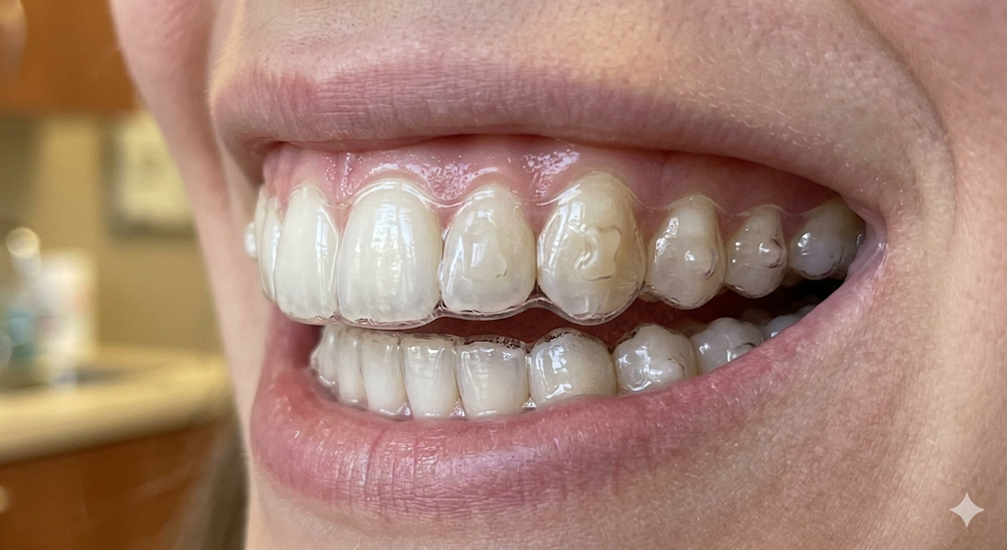
Invisalign attachments are small tooth-coloured composite shapes bonded to selected teeth. They act like tiny handles, giving the aligners more grip so they can apply force more accurately.
Without attachments, certain teeth can be harder to move in the exact direction your provider wants. With them, the aligners can push, pull, or rotate specific teeth more effectively.
Attachments are:
- Small
- temporary
- Custom-shaped
- Placed only where needed
Not every patient needs them, and not every tooth gets one. Some people may only have a few. Others may need more, depending on the type of movement being planned.
What to expect with attachments
Getting attachments is usually straightforward. Your provider places them using a template, bonds them onto the selected teeth, and hardens the material in place.
At first, they may feel slightly rough or unusual when you run your tongue over them. That sensation usually settles once you get used to it. Visually, they are designed to blend in reasonably well, though they may still be noticeable up close, especially on certain teeth or in bright light.
If one falls off, it is usually not an emergency, but you should let your provider know. In some cases, it needs to be replaced so that your aligners continue to track properly.
When Are Invisalign Attachments Needed?
Patients often ask, “Why do I need attachments if Invisalign is supposed to be clear and simple?”
The answer is that some tooth movements need more control than the aligner tray alone can provide.
Attachments are often used when the treatment plan involves:
- Rotating certain teeth
- Moving teeth up or down
- Improving root control
- Helping aligners fit more securely
- Improving tracking during more detailed tooth movements
They are especially useful when the aligner needs a better grip on the tooth. That does not necessarily mean your case is severe. It simply means your teeth need a more precise kind of movement.
In fact, attachments are common in many routine Invisalign cases. They are often part of good planning, not a sign that something is unusually difficult.
What is IPR in Invisalign?
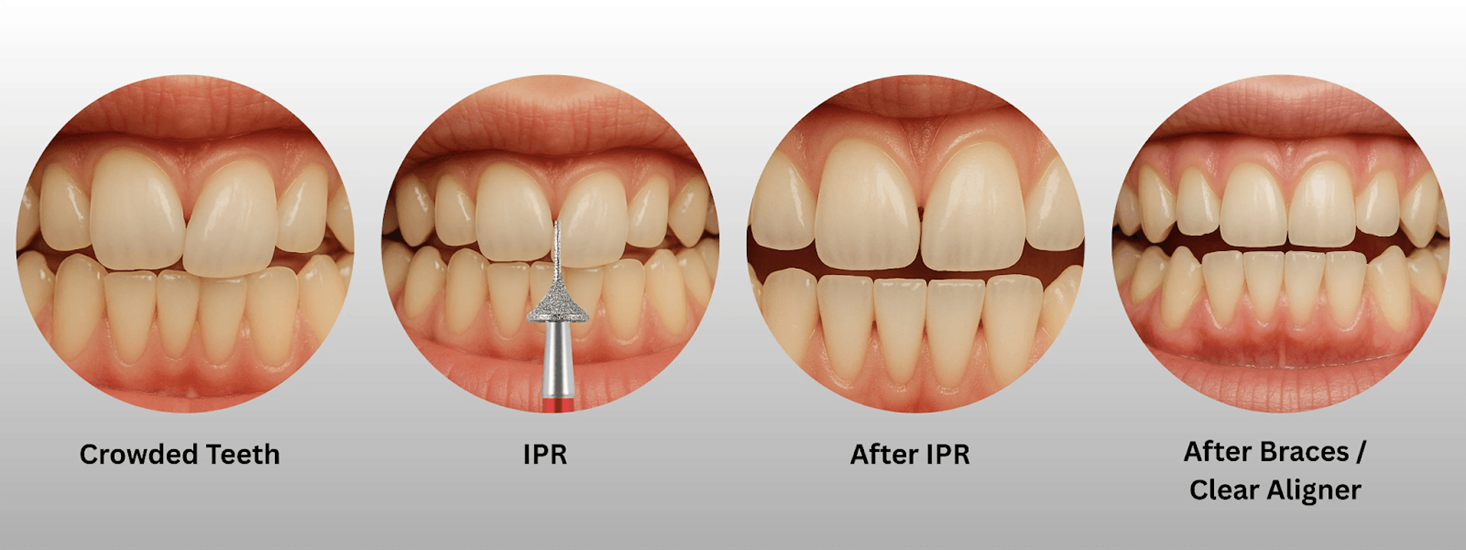
IPR stands for interproximal reduction. In simple terms, it means removing a very small amount of enamel between selected teeth to create a little extra space.
This is usually done in a controlled and measured way. It is not random filing, and it is not the same as damaging the tooth. The goal is to create just enough room for the teeth to align more smoothly when crowding is present.
IPR is often used when:
- The teeth are mildly to moderately crowded
- A small amount of space can improve alignment
- Your provider wants to avoid extractions in a suitable case
- The final result may benefit from better contact between teeth
For many patients, the word “reduction” sounds alarming. However, in practice, IPR is a planned and conservative technique. It is done only where needed and only in small amounts.
What does IPR feel like?
Most patients say IPR feels more unusual than painful. You may notice:
- Pressure
- Vibration
- A scraping sensation
- Mild temporary sensitivity afterwards
It is usually quick and often much less dramatic than patients expect before they experience it.
When Is IPR Needed?
IPR is usually recommended when your teeth need a small amount of extra space to align properly. It is especially common in cases of mild to moderate crowding, where just a little additional room can make a big difference.
Your provider may recommend IPR to:
- Make room for alignment
- Reduce crowding without removing teeth
- Improve how teeth fit together at the end
- Refine the final shape of contact points
- Reduce the appearance of black triangles in selected cases
Needing IPR does not mean your teeth are “bad” or that your case is extreme. It usually means your provider is trying to create the right amount of space for a more stable and aesthetic result.
What Are Invisalign Elastics?
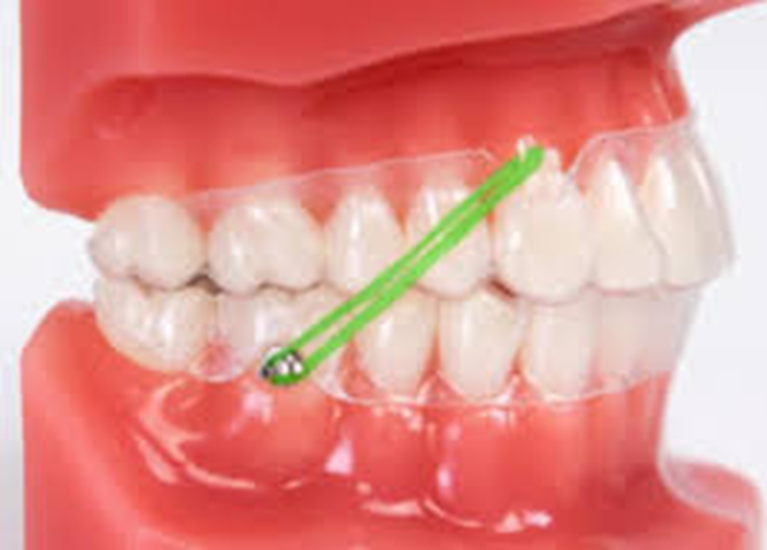
Invisalign elastics are small rubber bands used together with aligners to help correct the bite. Unlike attachments, which mainly help individual tooth movement, elastics are more about how the upper and lower teeth relate to each other.
They are usually attached using cut-outs, hooks, or buttons built into the aligner system or bonded onto the teeth. Their purpose is to apply gentle force between the upper and lower arches.
That force can help guide the bite into a better position over time.
When Are Elastics Needed With Invisalign?
Elastics are typically used when the treatment plan involves more than simple straightening. They may be recommended when:
- The bite needs correction
- The upper and lower teeth do not meet ideally
- There is overjet
- There is overbite
- There is underbite
- There are other bite issues between the upper and lower teeth
In these cases, aligners alone may not be enough to guide the bite as effectively as your provider wants. Elastics give that additional support.
This is another point where patients sometimes get anxious. They assume rubber bands mean their case is serious. Not necessarily. Elastics simply mean the bite needs a different type of correction, and your provider is using the right tool for that part of the plan.
Do Attachments, IPR, or Elastics Mean My Case Is Complicated?
Not automatically.
Sometimes these tools do indicate that your treatment needs more control than a very simple case. However, they are also used in many routine Invisalign cases. Attachments are especially common. IPR is common in crowding cases. Elastics are common when bite correction is part of the goal.
A better way to think about it is this: these tools do not mean your case is failing or unusually severe. They usually mean your Invisalign plan is being tailored more carefully to your teeth and bite.
That is generally a good sign.
Will They Hurt or Be Noticeable?
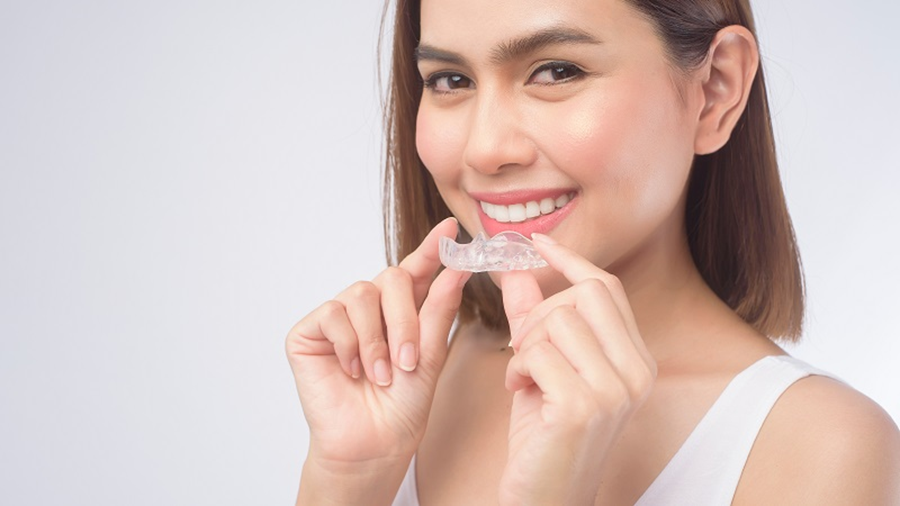
This is one of the most common concerns patients have before starting.
Attachments
Attachments may feel rough at first, especially when your aligners are out. They also make removing and inserting aligners feel slightly different in the beginning. Visually, they are tooth-coloured and usually blend in reasonably well, though they are not completely invisible. They can also stain more easily if oral hygiene is poor or if you frequently consume staining foods and drinks.
IPR
IPR often feels strange rather than painful. Some patients notice temporary sensitivity afterwards, but it is usually mild and short-lived. Most people find it more manageable than they expected.
Elastics
Elastics can create pressure when you first start wearing them, especially during the first few days. That pressure is not unusual. Like most orthodontic forces, it tends to settle as your mouth adapts. The bigger challenge for many patients is consistency. Elastics only work well if they are worn exactly as instructed.
Common Patient Questions
Will attachments be visible when I smile?
They may be slightly visible, especially up close, but they are designed to be as discreet as possible. Most patients find that other people notice them far less than expected.
1. Does IPR damage enamel?
When it is properly planned and done conservatively, IPR is a controlled clinical procedure. It is not random drilling or aggressive enamel removal.
2. Can I say no to elastics?
You can always ask questions and discuss alternatives with your provider. However, if elastics are part of the treatment plan, refusing them may compromise the final bite result.
3. What happens if an attachment comes off?
Let your provider know. Some fallen attachments need replacement, while others may not affect progress immediately. It is best not to guess on your own.
4. Do these tools make treatment longer?
Not necessarily. In many cases, they help treatment stay on track and improve predictability, which may actually support a smoother overall process.
5. Will Invisalign still be removable?
Yes. Even with attachments and elastics, Invisalign aligners are still removable. You will simply have a few extra steps or adjustments to get used to.
What This Means for Your Invisalign Plan
Not every Invisalign patient needs attachments, IPR, and elastics. Some need only one of these. Some need two. Some need none at all.
The right combination depends on:
- Your bite
- Crowding
- Tooth shape
- Movement goals
- How your teeth respond during treatment
That is why a proper consultation matters. A scan, bite assessment, and customised treatment plan will determine what is actually needed in your case.
If your provider recommends any of these tools, the most useful question is not “Is my case bad?” It is: What is this helping to achieve in my treatment?
A good Invisalign plan should clearly explain that.
If you are also comparing clinics or trying to understand what provider experience entails, read our guide to choosing the right Invisalign provider in Malaysia.
Book a Smile Assessment Today with Dental Home
Hearing terms like attachments, IPR, and elastics can make Invisalign sound more complicated than expected. In reality, these are common treatment aids used to improve the accuracy of tooth movement and bite correction.
They are not red flags. They are not signs that Invisalign is not working. More often than not, they are signs that your provider is planning your treatment with greater precision.
If your Invisalign plan includes one or more of these, ask your provider to explain why they are being used and what role they play in your case. Understanding the reason behind them usually makes the process feel far less intimidating.
Whether your case is simple or needs a little more control, the best way to know is through a proper assessment.
Contact us today to find out whether your Invisalign plan may need attachments, IPR, or elastics, and get a clearer picture of what to expect before treatment begins.